Saturday 7th February – 10am to 1pm led by a local bryologist, Dan Wrench.
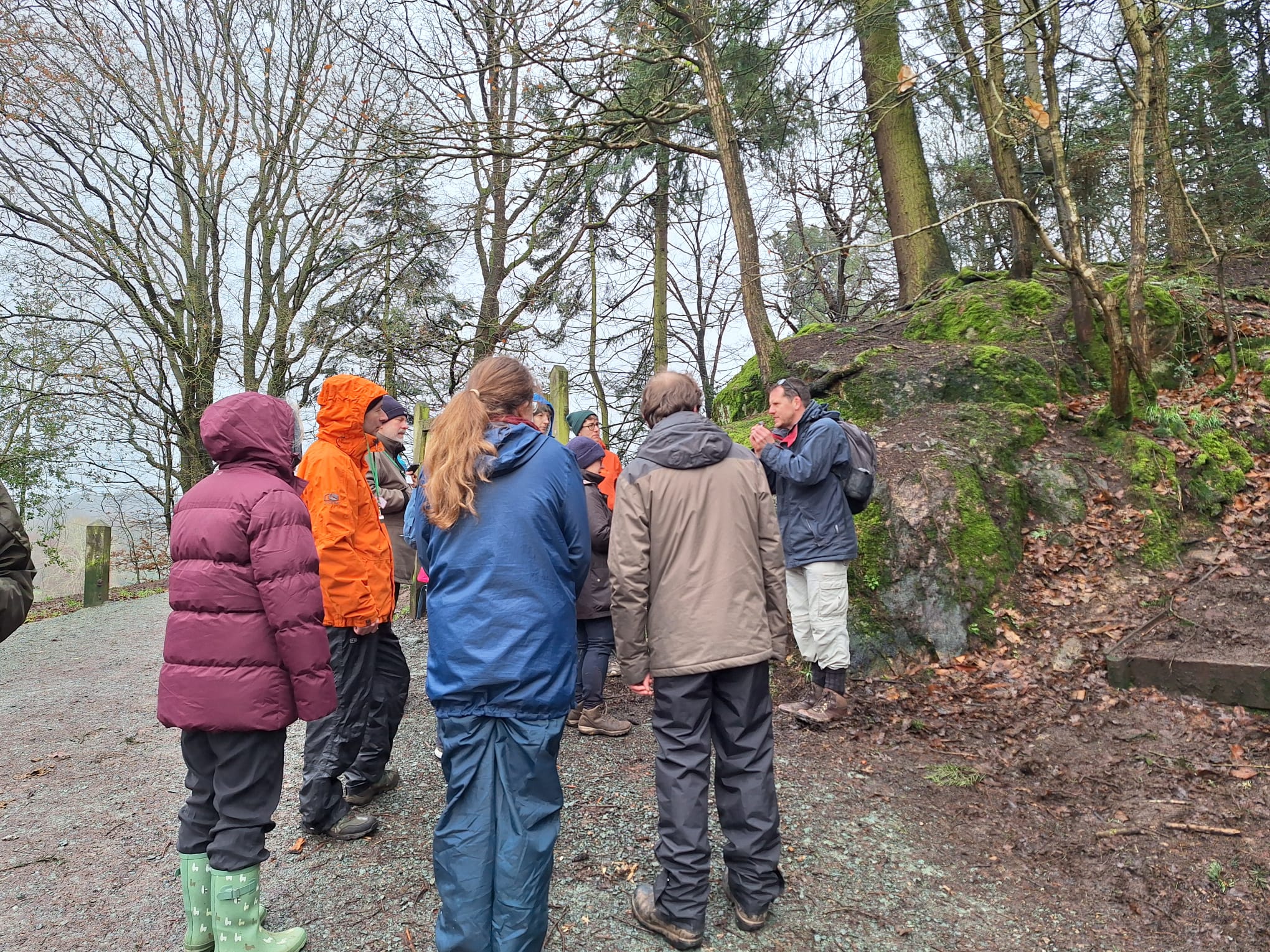
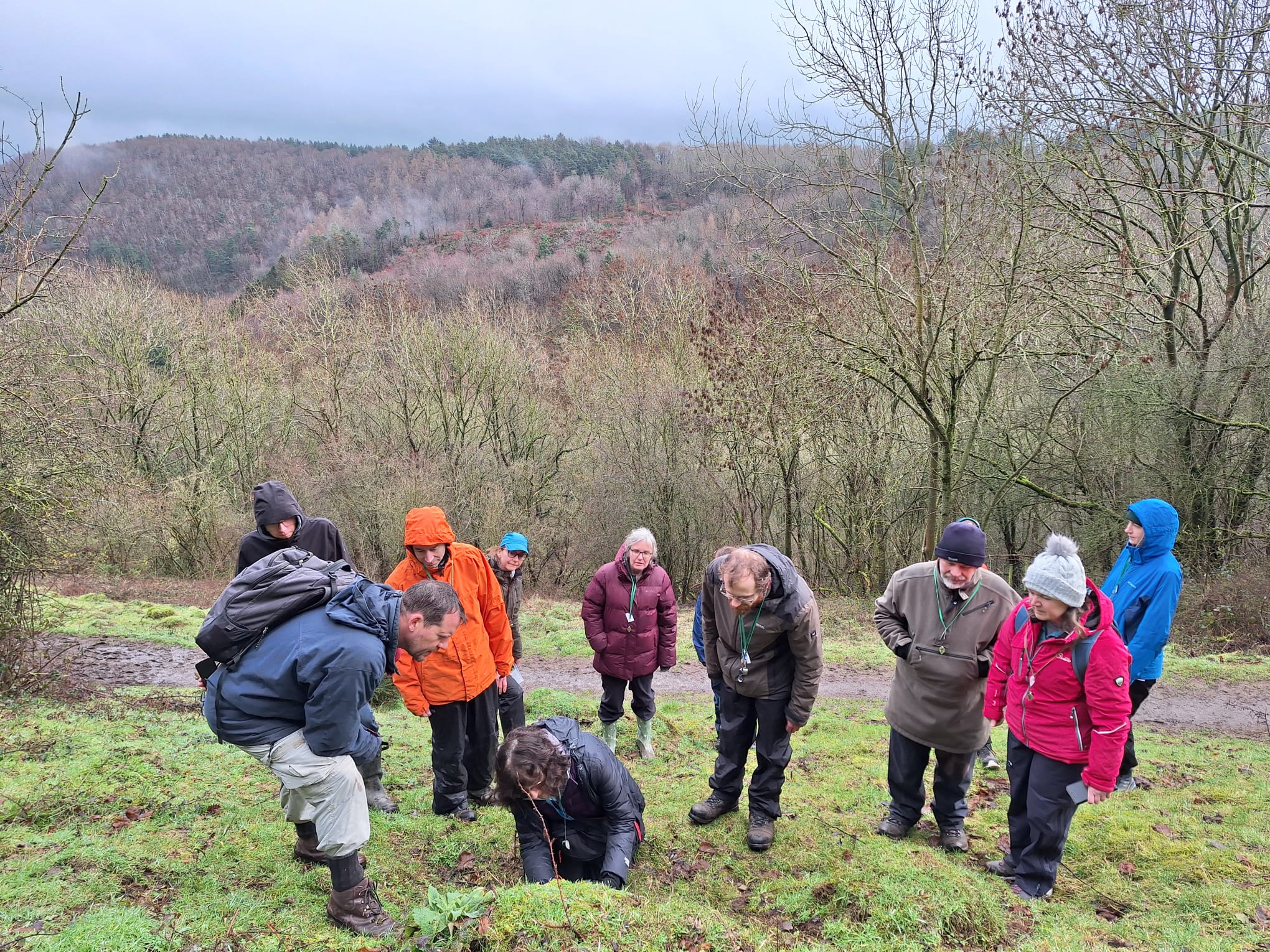
A group of 15 gathered on a damp morning in the Pontesford Hill Car Park armed with hand lenses and ready to learn more from Dan about the bryophytes growing locally around the hill. We started by learning about the differences between mosses and liverworts as well as the differences between acrocarp and pleurocarp mosses. The group marvelled at the complexities and differences between species as we paused at a rock on the way out of the car park which was covered in mosses and liverworts. We used our hand lenses to take a closer look at the different intricate leaf structures and sporophytes. Growing on the rock was the beautiful Ciliated Fringewort (Ptilidium ciliare) with its distinctive fringed leaf margins. Other species included Capillary Thread Moss (Bryum capillare), Broom Fork Moss (Dicranum scoparium) and Bank Haircap (Polytrichastrum formosum).
Having seen so many species without moving far from the car park, we continued along the path battling through the muddy conditions towards the ant hill meadows. We explored the woodland species along the way, such as the Common Tamarisk-moss (Thuidium tamariscinum) with its fern like tri-pinnate flattened branches covering the woodland floor. We also looked at the Hart’s-tongue Thyme-moss (Plagiomnium undulatum) with it’s striking and unmistakeable tongue-shaped, undulate leaves.
As we carried on our walk, Dan spotted Bluish Veilwort (Metzgeria violcaea), a liverwort which is sensitive to air pollution and is often found in places where the air quality is good. This liverwort had not been recorded on the site before, so Dan added the sighting to iRecord. In the ant meadow we found plenty of Springy Turf-moss (Rhytidiadelphus squarrosus) which is a common moss species in lawns.
We made our way to the star moss of the day, Rose-moss (Rhodobryum roseum) which forms a distinctive rosette of large leaves and favours habitat on or around the large nests of yellow ants. This species has a limited distribution in the UK and Pontesford Hill is the only place in Shropshire where you can see it.
In total, the group discovered around 28 different species, and we were all enthused and thankful to Dan for introducing us to the wonderful world of mosses and liverworts.
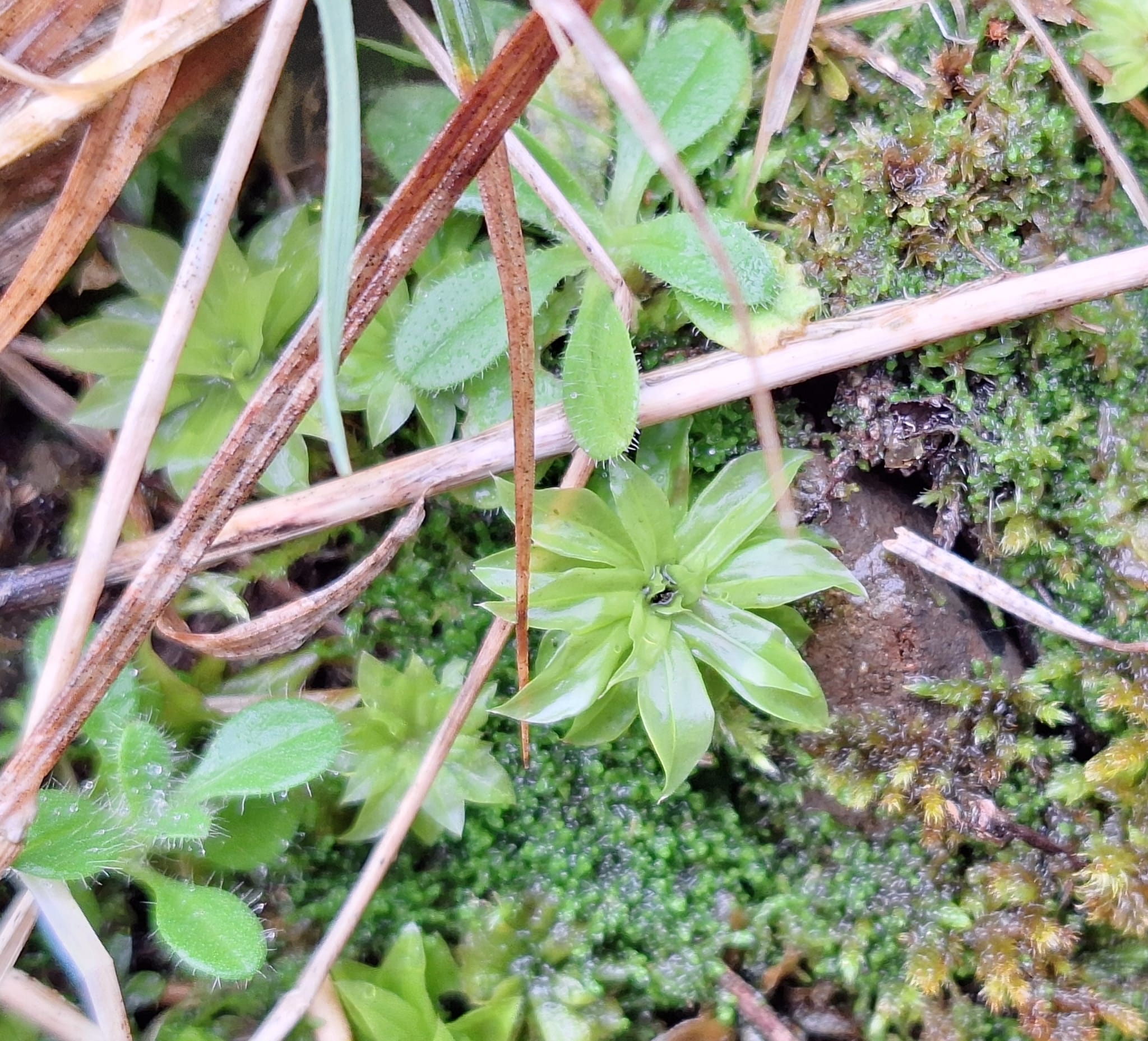
Rose-moss (Rhodobryum roseum)