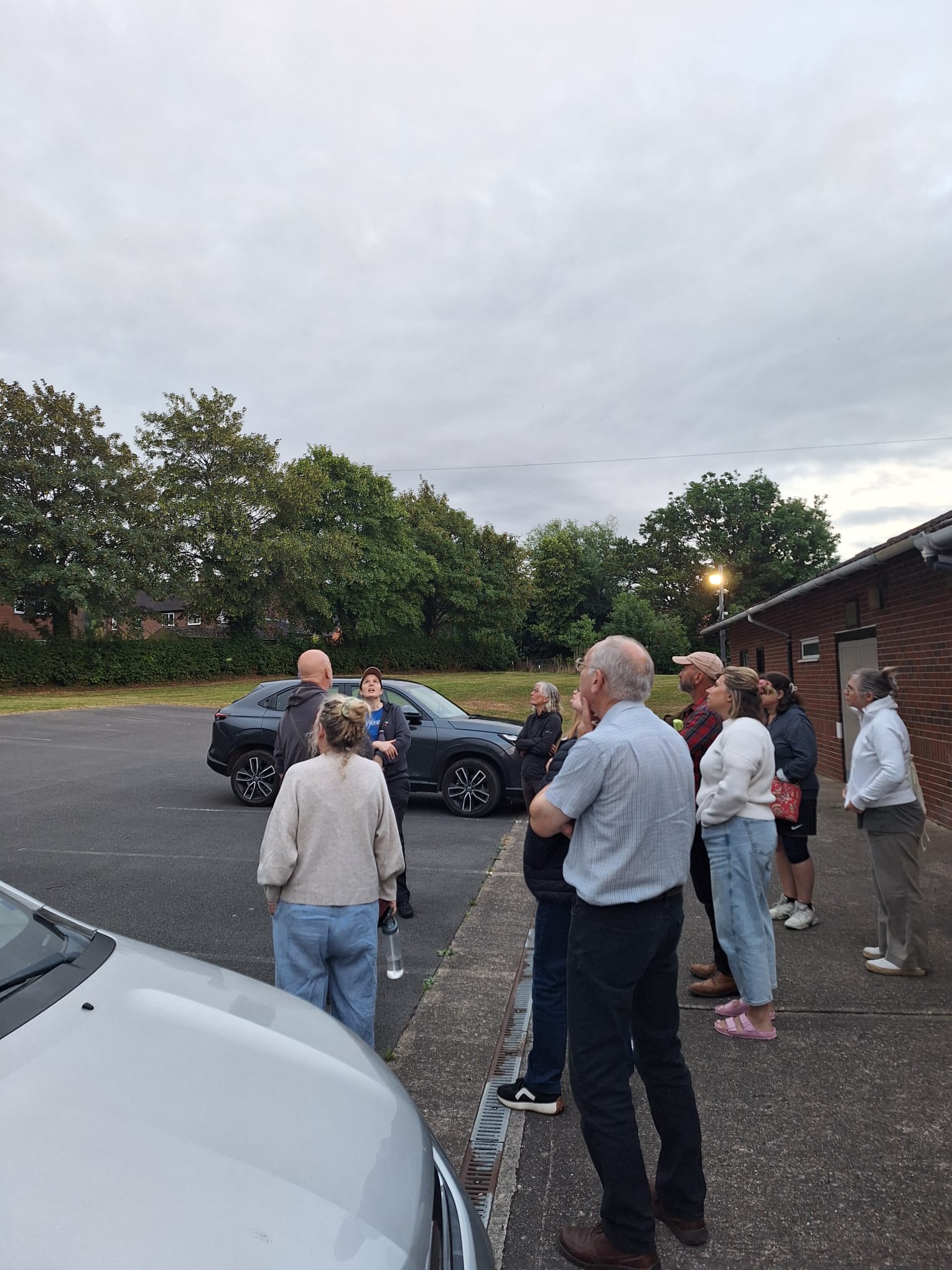
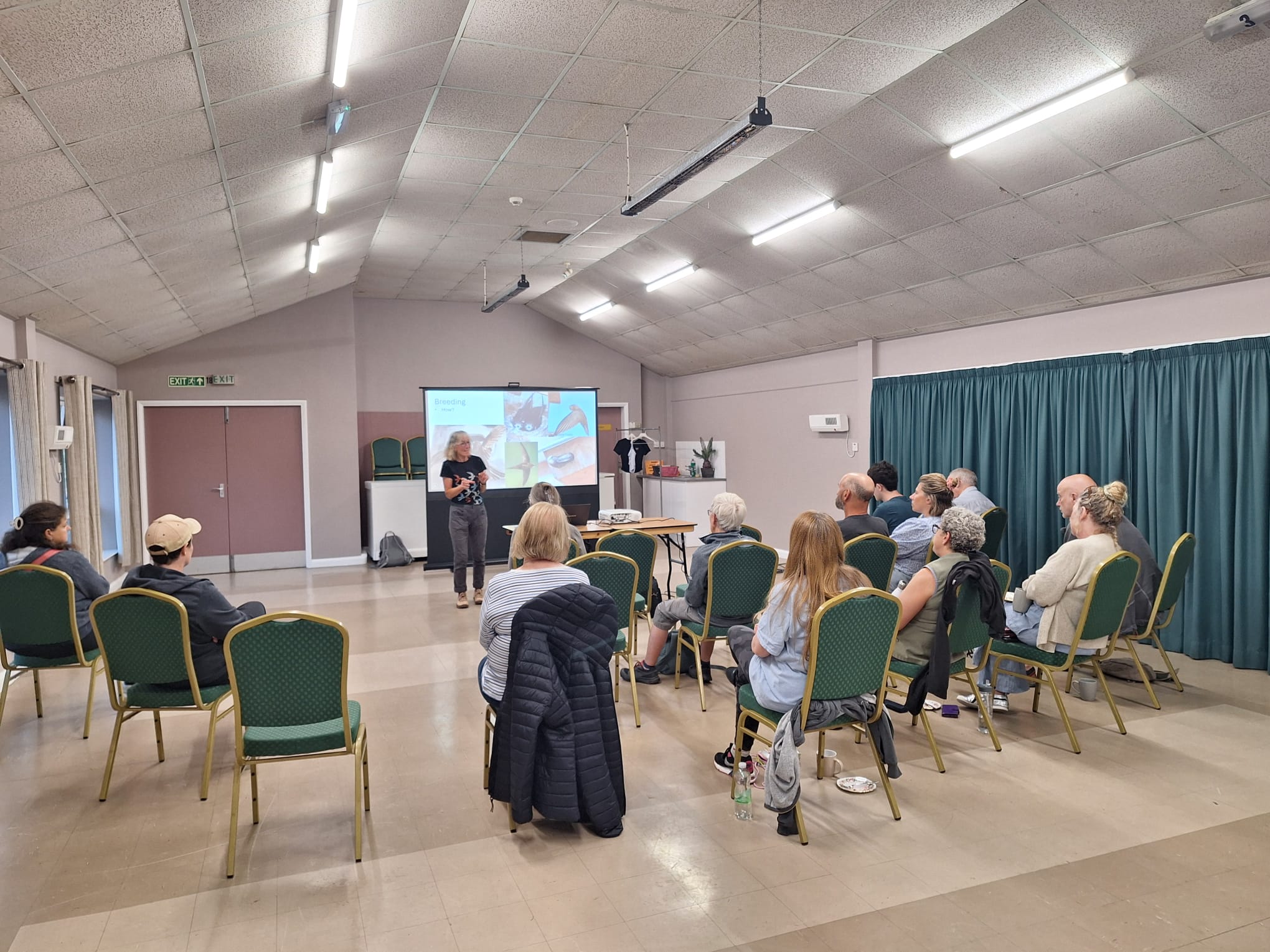
During Swift Awareness Week 2026 (27th June – 5th July), the RVCWG hosted two special events to help celebrate these amazing birds. The first was an engaging and informative talk by Shropshire Swift Species Champion Julie Cowley for a fully booked crowd of 18. Julies enthusiasm, knowledge and passion seeped into the crowd and after an enjoyable question and answer session we walked around the swift hotspots of Minsterley to witness these incredible birds in action.
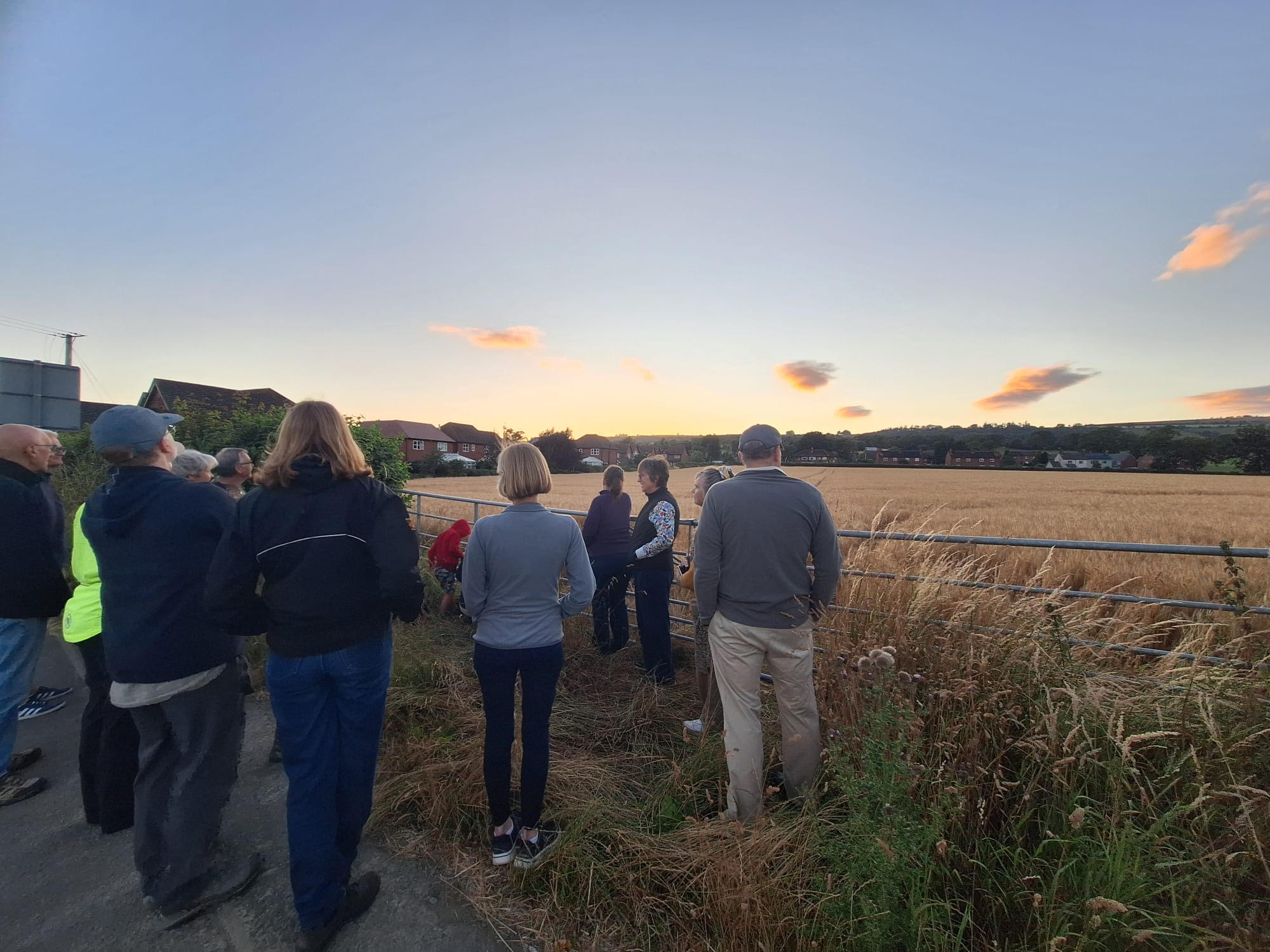
The second event took place in another Rea Valley hotspot of Brockton. This rural village hosts numerous active and successful swifts nests and is an ideal place to experience close fly pasts and social behaviour of swift colonies. 16 people met for an evening stroll providing an opportunity to learn all about swifts in a relaxed and gentle way as well a definite sighting of swifts.
The following showcases what the RVCWG members have learned from both experiences.
What are Swifts:
Swifts are the ultimate aerial acrobats, an iconic visitor that is imbedded in our culture and whose sound is slowly disappearing from our hazy summer days. Their numbers have plummeted by roughly 70% in the UK over the last three decades. These remarkable sickle-winged birds are currently on the UK Red List of birds of conservation concern.
Swifts possess a truly extraordinary lifecycle built around perpetual flight. Aside from nesting, they spend an entire life in the air.
- Perpetual Motion: They eat, drink, mate and even sleep while soaring high in the sky.
- No Landing: Outside of brief summer breeding season, a Swift will stay airborne for up to ten consecutive months without ever touching the ground.
- Massive Migration: Every Autumn, they fly a gruelling 7,000-mile journey to spend the Winter in sub-Saharan Africa, returning to the UK every May.
- Lifetime Partners: Swifts are highly loyal, pairing up for life and sharing all parental duties equally.
Swifts originally nested in cliffs and hollow trees, but hundreds of years ago, they adapted completely to human architecture. They look for tiny nooks, crannies, and gaps under the eaves of older houses, churches, and barns. They require a clear drop of at least four metres below the nest entrance so they can fall straight into the air to take flight. Because they cannot walk on the ground, they gather all nesting materials—like feathers, seeds, and dried grass—right out of the air and they use their own sticky saliva to cement these floating bits together into a small cup. Importantly, a massive 94% of Swifts return to the exact same nest site year after year.
Time to party?
Swifts have “screaming parties” that are noisy, acrobatic gatherings of Swifts flying at breakneck speeds just above rooftops. Typically occurring on warm summer evenings, a flock of dozens of birds will race around chimney pots and buildings while emitting their signature high-pitched, piercing shrieks. These exciting displays are social events and serve as key markers of the Swifts’ breeding season. The “screaming parties” are primarily for socializing, establishing territory, new courtship behaviour or existing pair bonding and showing off. The screeching serves to bond the colony, advertise nest locations, and allow younger birds to find mates. If you hear the screeching then that is a very good indication that there are active nest sights nearby.
Why are our skies growing quieter?
Between 1995 and 2024, the UK Swift population crashed by an estimated 70%. They face a severe modern housing crisis alongside a drastic drop in their primary food source: flying insects.
- The Modern Housing Crisis: As old buildings are demolished or heavily renovated, traditional nesting gaps are accidentally sealed up. Modern insulation, plastic soffit replacements, and tight building regulations leave returning, loyal Swifts completely homeless.
- The Insect Apocalypse: Climate change, habitat loss, heavy pesticide uses and changing farming methods have caused insect populations to crash globally. A single Swift needs to catch up to 100,000 flying insects a day to feed itself and its chicks, making food scarcity a major threat.
How can we save the Swift?
Because Swifts live so closely alongside humans, ordinary citizens and communities have a unique power to help reverse their decline.
- Fit Swift Bricks: If you are building an extension or a new home, build “Swift bricks” directly into the walls. These are low-cost, hollow concrete bricks that provide a permanent, insulated home for life. Scotland made these a legal requirement for new builds in 2026, setting a vital conservation standard.
- Put Up Nest Boxes: You can easily buy or build external wooden Swift boxes. Mount them securely under your roof eaves at least four metres high, ensuring there is a completely clear flight path out front. The dimensions for building your own Swift box can be found on the RSPB website or Wildlife Trust website.
- Protect Active Nests: If you are planning roof repairs or installing scaffolding, always check for active nests first. Under the Wildlife and Countryside Act 1981, it is illegal to intentionally damage, block, or destroy an active nest.
- Raise awareness: Support the Swift action plans of local groups such as the Shropshire Ornithological Society, Caring for God’s Acre, Community Wildlife Groups and Local Swift Groups and Swift Local Networks. Tell your neighbours, family and friends about how amazing Swifts are and become a voice of advocacy for these amazing birds.
- Become a Citizen Scientist: Use the RSPB Swift Mapper which is a web-based mapping system and mobile app used to share your sightings of nesting Swifts as well as to note ‘screaming’ parties. This critical data allows local conservation groups to protect existing colonies from future development.
- Garden Responsibly: Reduce or entirely stop your use of chemical pesticides to allow local insect populations to recover, restoring the crucial food supply Swifts need to feed their chicks.
Swifts spark joy
Although facing major decline and numerous difficulties, Swifts still bring joy to our summer evenings. Everyone of us can help safeguard the future of the Swift, whether through planting insect-friendly gardens to provide food, advocating for wildlife-friendly building designs, teaching others about these incredible birds or just simply taking a moment to look up and appreciating their joyful dance in our summer skies.