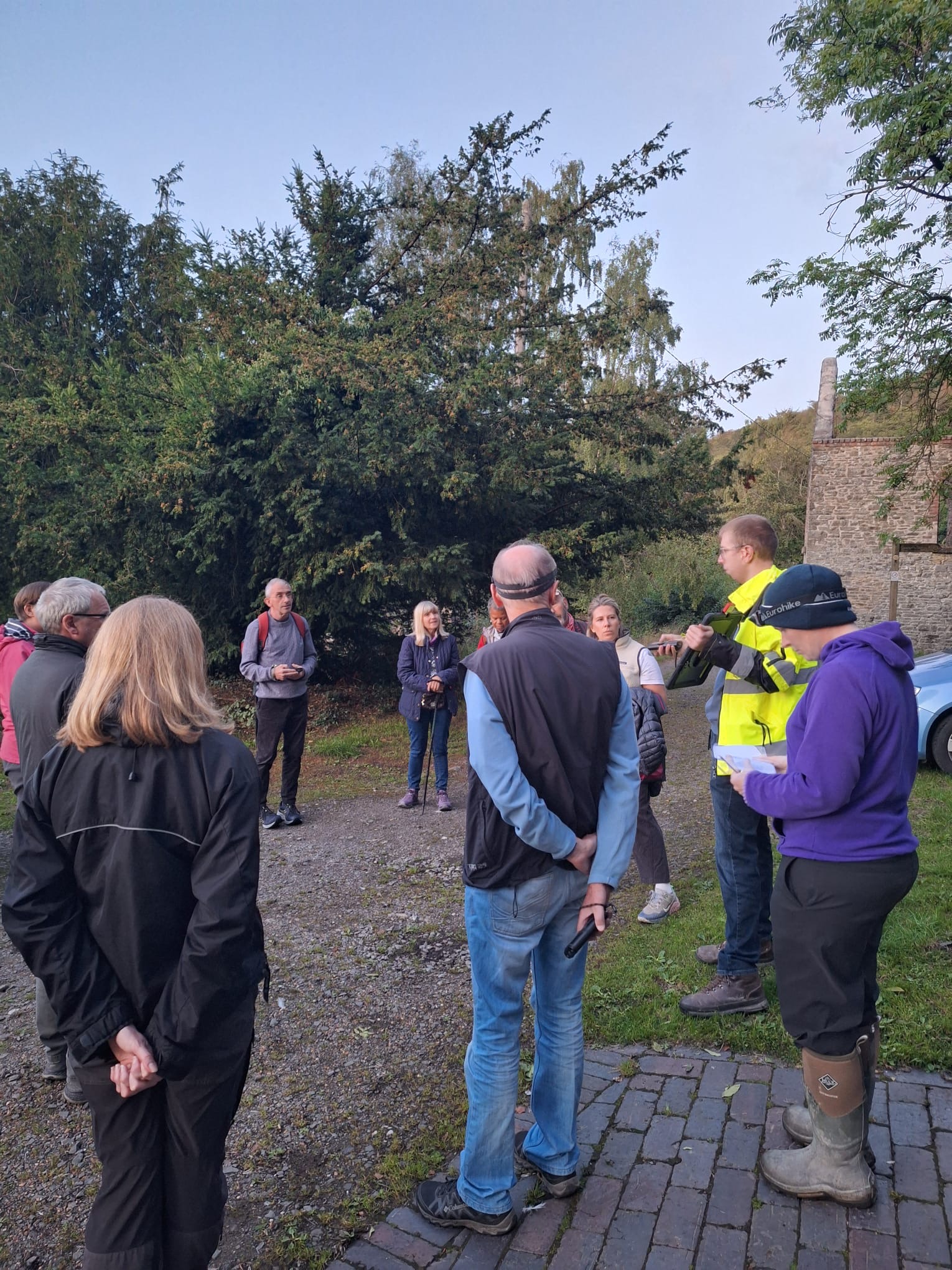
On the evening of Saturday 5th September the group assembled at Snailbeach Lead Mines. Before the introduction to the walk had even started, bats were seen and detected flying overhead, a hasty brief was given and instructions on using detectors provided before the group moved on to the first location. Standing outside one of the former mine buildings the group gathered and watched closely to see Lesser Horseshoe bats emerging, quick and agile they can be hard to see but most got a glimpse of movement. Activity soon reduced, temperatures already noticeably dropping and bat activity unexpectedly early.
A short walk back to the mines site the group then proceeded to a mineshaft entrance in the hope of witnessing some more bats emerge from their roost. Unfortunately, once at the shaft activity was already negligible, with barely a noise from any of the detectors it was clear the bats had either already come out or were staying in as the temperature kept reducing. Noticeably chilly after 10 minutes of waiting the group moved on to the reservoir, usually a haven of activity. Thankfully, once again it delivered, though perhaps lower levels of activity than on previous visits. Detectors were all clicking away, with Common Pipistrelle, Soprano Pipistrelle and Daubenton’s bats present. Lots of ‘feeding buzzes’ were heard as bats were catching prey over the waters surface. Around 20 minutes at the reservoir and activity began to reduce, temperatures already below what had been predicted for the evening they were probably calling it an early night!
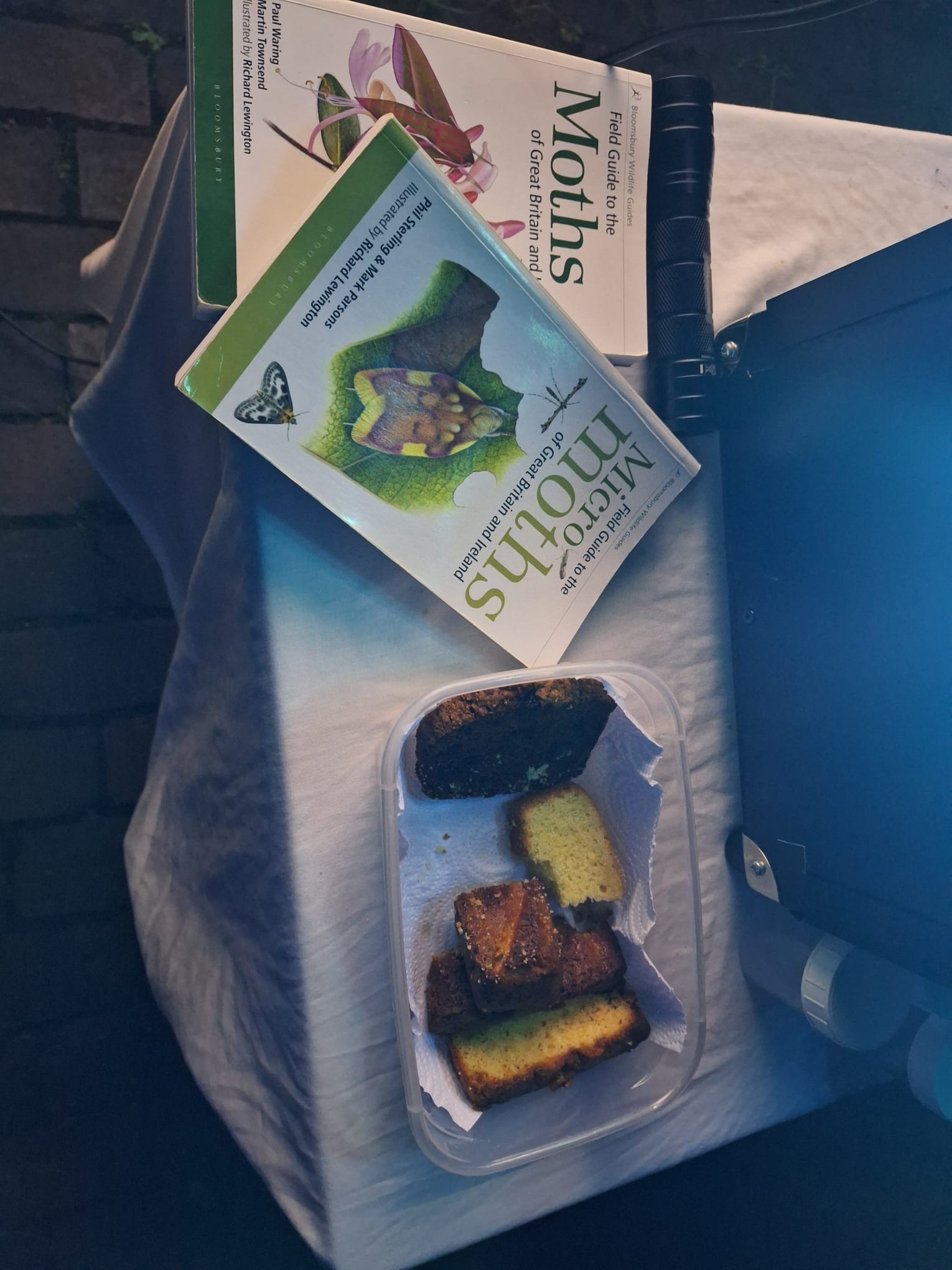
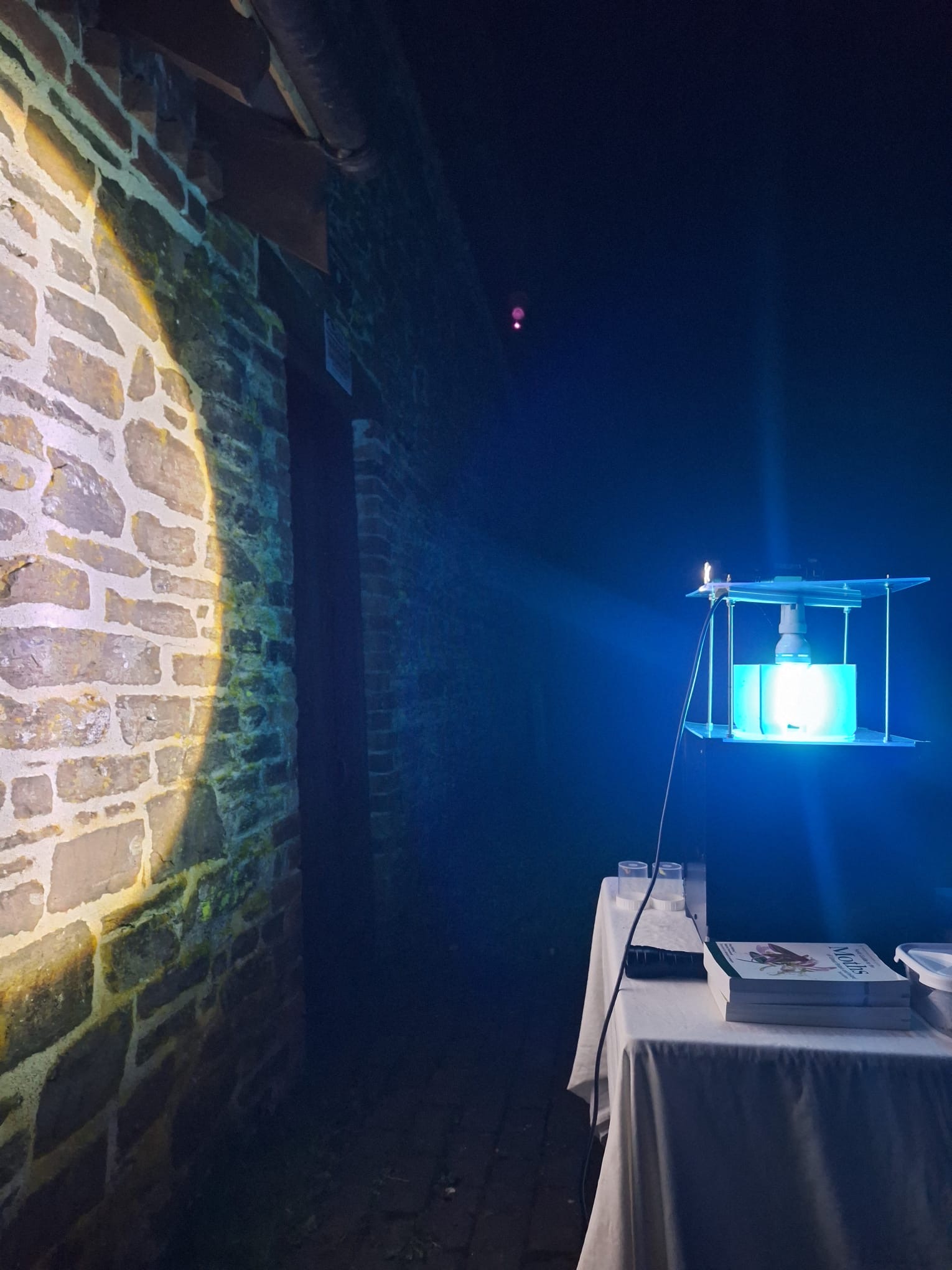
Following on from the groups batty adventures they made their way up to the Snailbeach visitor centre where one of three actinic heath moth traps had been set up against the wall. Its light had been shining for an hour, with supplementary lights pointed to the wall in the hope of attracting a variety of moth species. Moth light traps are used to record moth species; they allow you to get close to the moths and record what species you’ve caught without causing them any harm. The moths get attracted to the light, get funnelled into the box trap and rest on egg boxes inside where they feel safe. They are then placed in small pots so they can be more easily identified.
It was a dry, cloudy evening which seemed ideal for moths to be flying about, but unfortunately the temperatures dropped lower than expected as it reached darkness. This meant there weren’t the huge numbers we had hoped for, however, the lights still seemed to attract a nice range of species. We placed these in the pots for people to see, showing everyone the different shapes, sizes and colours that moths can be found in. Some of the species we had included Brimstone moth, Snout, Centre-barred Sallow, Dusky Thorn, Oak Hook-tip, Oak Lustring and Small Blood-vein. The group then went on to visit two other moth traps that were a different style – actinic skinner traps – that Tess and Jill had kindly loaned us for the session. These were placed nearby in slightly different habitat and bought in a Common Wainscot, Square-spot Rustics and Large Yellow Underwings.