A Walk of Two Worlds
We set off on a chilly, overcast day from the Pontesford and Earls Hill carpark heading towards the scree and woodland path. Soon we discovered some old wood with some fine black fungal fruiting bodies. These hard, fruiting bodies resemble burnt cakes, this has inspired their common name “King Alfred’s Cakes” after the English King who burnt the cakes when he was asked to mind them: so preoccupied by worrying about Viking invasions that he didn’t notice that the cakes had burnt. In the past they were also carried in peoples pockets to ward off cramp and also used to carry fire between camps as they smoulder for long periods when lit.
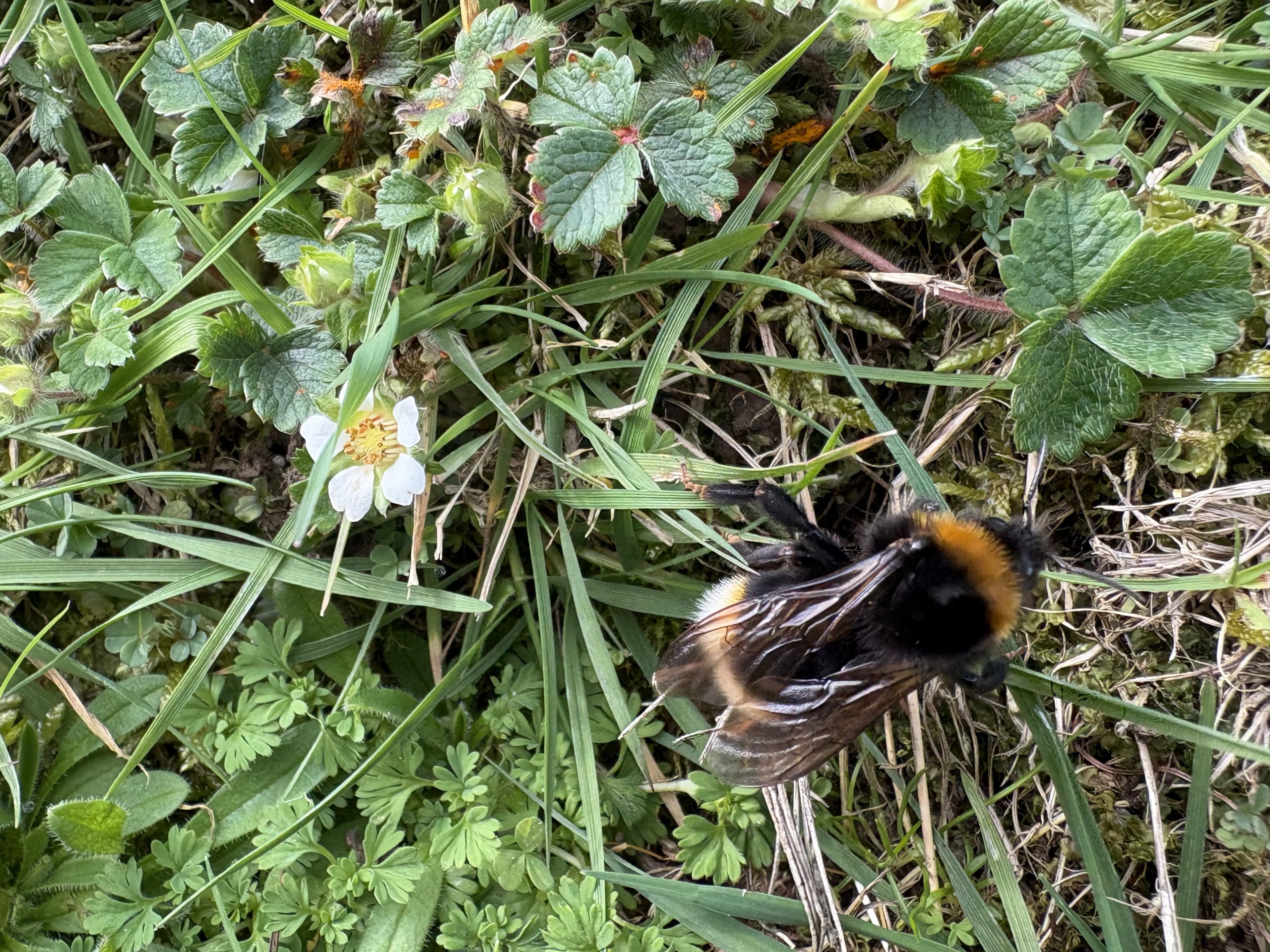
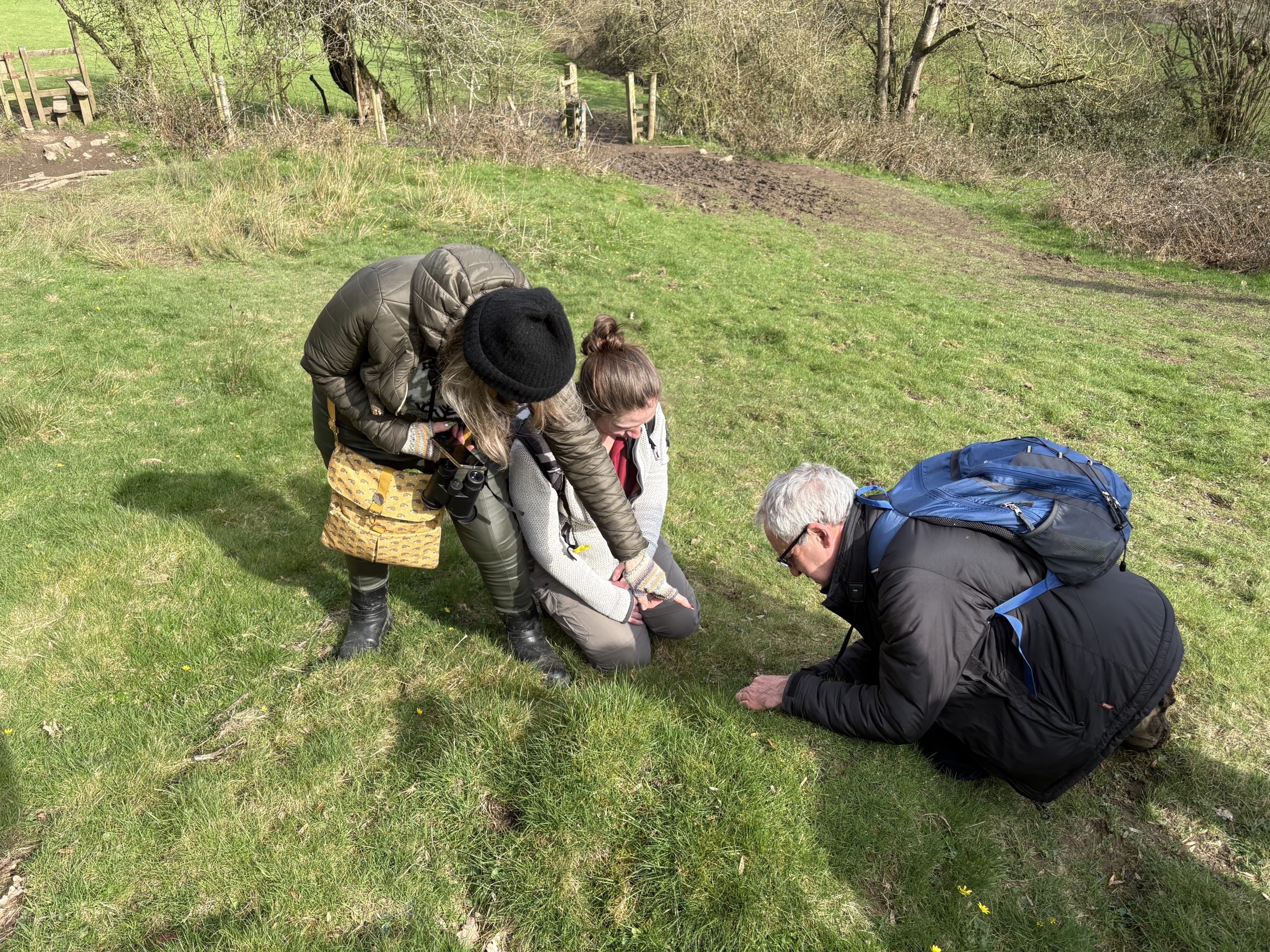
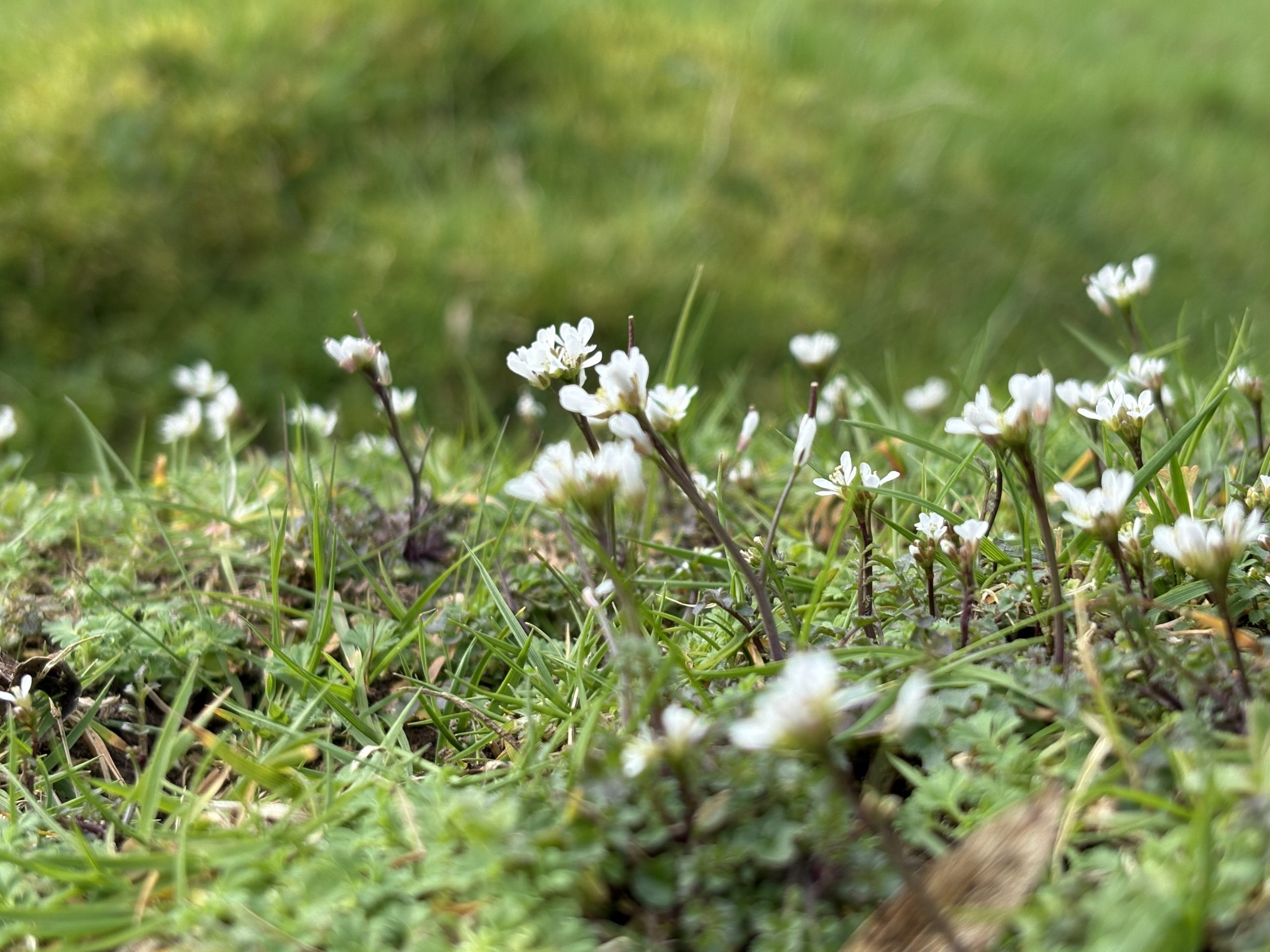
Soon the looming mass of Earls Hill came into view, its ancient lavas erupted over 500 million years ago (some of the oldest rocks in Shropshire) looking a bit like a giant anthill. Turning our backs on this ancient, violent world we turned our attention to the tiny world of the real anthills that are nestled at the feet of the hill in their meadowland. They are designated as one of Earl’s Hills SSSI’s. Yellow meadow ants (Lasius flavus), make mounds that can be over 500 years old, ancient hills abound in this area of Shropshire both large and small. The mounds created by the ants produce microhabitats with some sides in sun, some in shade and with different temperatures. The ants live underground farming the aphids that live on the roots of the meadow grasses. Busy cities with highways and byways full of activity. Like Gulliver we loomed above this Lilliputian world. The mounds really are like meadows in miniature . Although it was early in the year we saw some lovely plants, Parlsey Piert, Changing flowered Forget-me-Not, and little stands of Hairy Bittercress and Barren Strawberry both in flower spangling the short grass atop the anthills, with their shining white flowers. An early Bumblebee was taking advantage of the early nectar source. Soon the rainclouds gathered and plops of rain hastened our retreat back to the carpark, leaving the ants to their meadow making and farming; earth moving almost on the scale of Earls `Hill’s volcanic past. (Thanks for Paul Maddox for helping with plant ID on the walk)