This event was led on 26th April 2026 by Kat Edwards-White, local botanist and RVCWG Secretary.
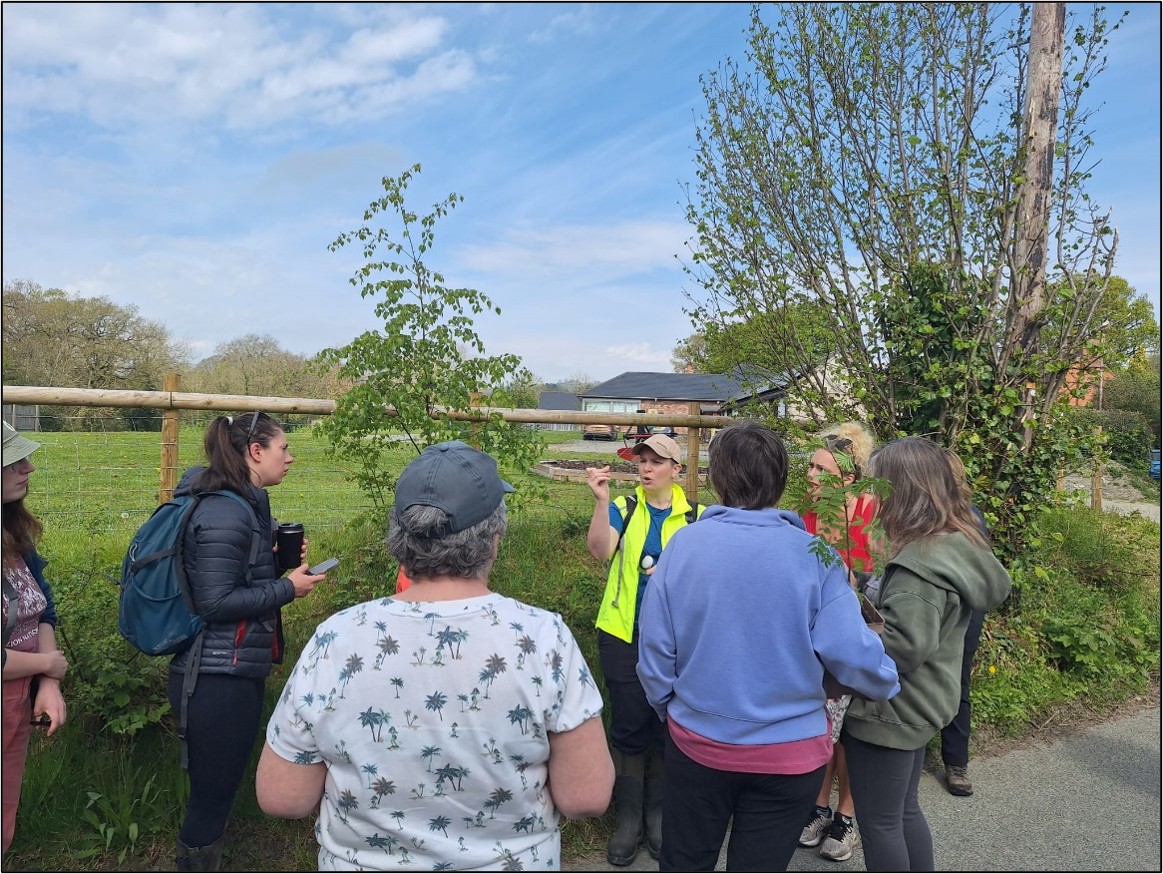
A group of 15 of us gathered on a sunny morning in Brockton ready to learn all about the wildflowers in the area. Kat led the group north from Brockton along the road towards Beechfield Dingle, stopping to show everyone the range of wildflowers that filled the roadside verges and hedgerows. We were shown species such as Bush Vetch, Garlic Mustard, Lesser Celandine, Greater Stitchwort, Greater Chickweed and Shining Cranesbill.
As we admired the variety of wildflowers, Kat shared with everyone the names of the species and any identifying features.
The group were shown the difference between similar species such as Early Dog-violet and Common Dog Violet, which differ by having a purple or a cream-coloured spur. Also, Wild Strawberry and Barren Strawberry which were both in flower and growing next to each other on a roadside bank.
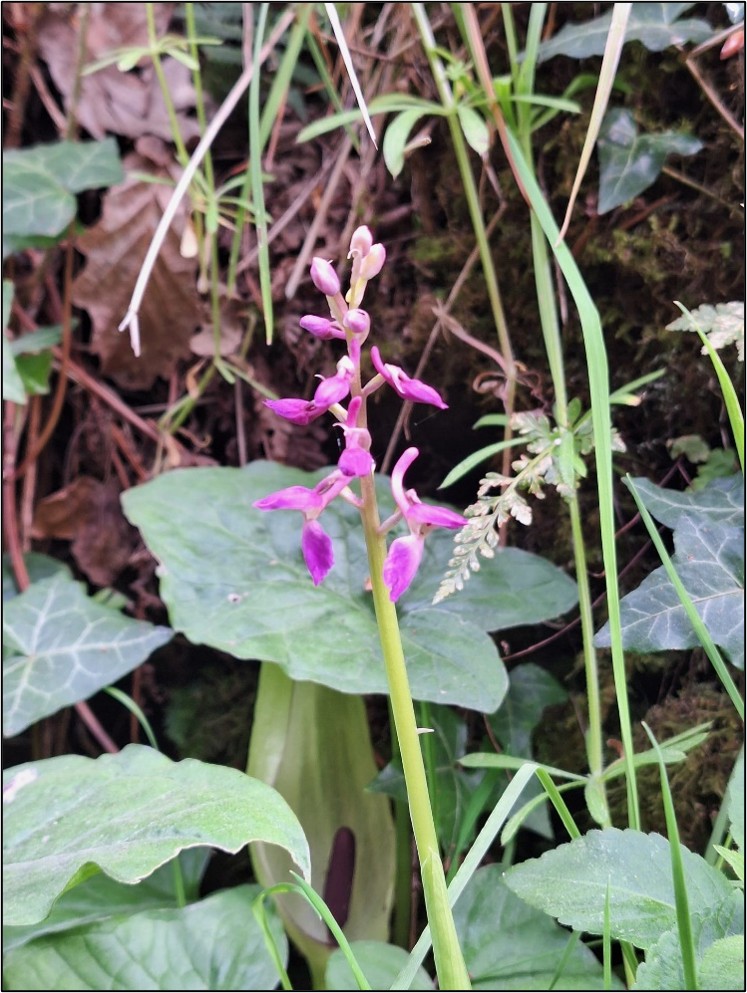
As we all approached Beechfield Dingle, Kat showed everyone a flowering spike of Early Purple Orchid on a nearby bank. This is the only site in the Rea Valley where this orchid species grows, and it is one of the earliest flowering orchids in the year. To Kats surprise, there was also Black Spleenwort growing nearby. This is a fern that grows on well drained rocky substrates and isn’t a common fern species, so it was nice to see.
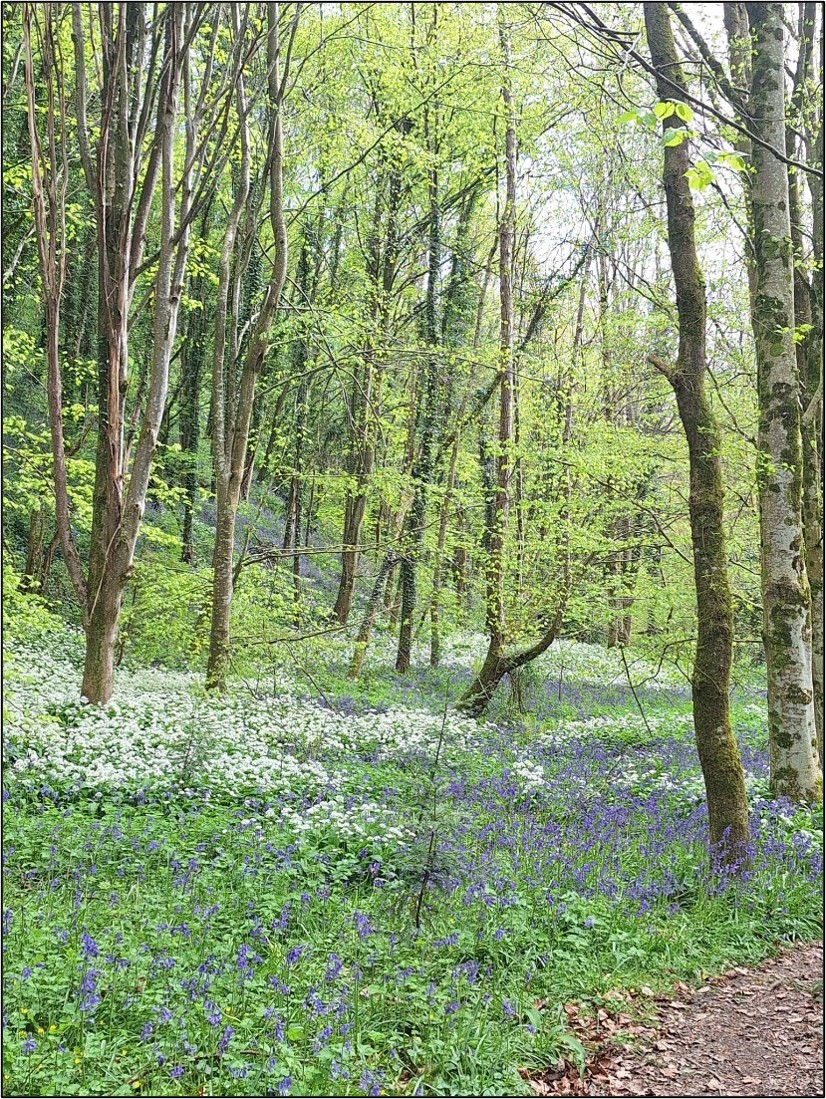
We then continued to walk the path through Beechfield Dingle enjoying the sight and smells of this beautiful woodland carpeted in Wild Garlic, Bluebells and Wood Anemone. Stopping briefly to be shown the difference between Opposite-leaved Golden-saxifrage and Alternative-leaved Golden-saxifrage because this is one of only a few sites in the Rea Valley where both species can be seen growing together.
Late April is the best time of year to enjoy wildflowers in woodlands as the flowers make the most of the increasing light levels before the tree leaves cast them into shade for the rest of the season. The species of wildflowers you see growing on the woodland floor can often tell you something about the history of the site. Certain species are known as ancient woodland indicators and the presence of these species can show you that a site has been a largely undisturbed woodland for a considerable length of time. Throughout the walk, Kat pointed out some of the ancient woodland indicator species including, Wood Medick, Sanicle, Woodruff, Moschatel, Goldilocks Buttercup and Yellow Archangel.
It was a lovely area to explore and a great place to learn all about spring wildflowers in the Rea valley.